
Reviewed by: Cindy Hatcher
2026 eco-friendly resolutions: Water conservation in Alabama
Reading time: 6 minutes
Sponsored

Here is news that did not make major headlines in December 2025.
According to a U.S. Drought Monitor December 18, 2025 report for Alabama, 73% of the state is experiencing drought conditions, impacting an estimated 3,517,772 people.
Why is this important?
When a drought occurs, several things happen. At the moderate drought stage, designated by the U.S. Drought Monitor, ponds and streams are low and campfires are banned in National Forests.
If the drought reaches severe levels, crops are damaged, some ponds and streams go dry and hydroelectric power decreases.
And then there is extreme and exceptional drought. The impact?
- Air quality is poor (caused by increased wildfires and dust storms).
- Water conservation measures are likely implemented.
- Large municipalities will begin water restrictions and might increase water prices, while in rural areas wildfires spread and crops are devastated.
- Water quality deteriorates because the natural river system is altered by taking water out of a low flow river, stream or lake and then putting polluted and sewer water back into it, albeit some of it may have been treated.
This December 2025, counties in the Black Belt — Marengo, Hale, Perry and Greene — are experiencing extreme and exceptional drought.
Lessening the impact of droughts on our state’s natural resources and people’s wallets is the reason why water conservation matters in Alabama.
In our first two stories in our series about making eco-friendly resolutions in Alabama for 2026, we explored ways people can begin composting and saving energy.
In our third and final edition, we will look at why Alabamians should resolve to reduce their water footprint in 2026.
Alabama is not like the Western U.S. — Why should we care?

Did you know Alabama is the fourth wettest state in the U.S. behind Mississippi, Louisiana and Hawaii?
Want to stump someone on a trivia night? Mobile regularly receives nearly double the amount of annual rainfall (66 inches) than Seattle, Washington (39 inches).
It begs the question — why should Alabama care about water conservation?
Alabama tends to have sudden “flash” droughts that may last only a few months, which are followed up by a rainy month, Executive Director at the Alabama Rivers Alliance, Cindy Lowry, told The Bama Buzz.
When we do have droughts, even short-lived ones can be very harmful. For example, in 2016, it did not rain for 61 days in Birmingham, shattering the longest rainless streak by nine days. As a result, the headwaters of the Cahaba River and Lake Purdy, the drinking water source for hundreds of thousands of residents, ran dangerously dry.
“We’re not Western-states-dry. Parts of California experience droughts that last years. The droughts we get might be several days to several months long, but they happen frequently in Alabama. Presently, there’s still no solution to protect agriculture, to protect industries, to protect drinking water and ecosystems in these times of water shortage.”
Cindy Lowry, Executive Director,Alabama Rivers Alliance
What is the answer to Alabama’s frequent droughts? Lowry proposes water conservation, water efficiency, and a statewide water plan as a solution to mitigate future droughts big and small.
Water conservation tips

So how do you start conserving water at home and in your community? Below are some useful tips to help you get started ahead of 2026
✅ Do you know your water footprint? It is always good to learn how much water you personally use. You can do that by using the Water Footprint Network personal and extended water footprint calculator.
✅ Fix a leak. The average U.S. household leaks nearly 10,000 gallons of water a year. You can save up to 10% on your water bill by just fixing leaks. Places where the leaks occur? Toilet, faucet, showerhead and outdoors. Here is EPA’s “How to Fix a Leak” page.
✅ Look for the WaterSense label when purchasing new showerheads, low flow toilets, faucets, plumbing fixtures etc.
✅ Plant and preserve native plants! Generally, native plants don’t need as much water as non-natives and can survive droughts because they are adapted to Alabama’s environment.
Watch the Southern Exposure video about the native plants and water conservation in Birmingham and across the state:
Protecting our clean water
During the drought of 2016, Randy Haddock, the field director for the Cahaba River Society, observed hundreds of mussels in the southern end of the Cahaba River stranded because of low flow and sometimes dry riverbeds.
Not only is our volume of water important, but its cleanliness for human consumption and viability is imperative.
Fresh, clean water provides habitat for our local fishes and mussels as well as protected animals including the Black Warrior water dog salamander, watercress darter and many others.
More resources to help you keep your 2026 resolution

Are you ready to conserve water and protect our valuable natural resources? Some of the best local information and insights comes from local water boards and state natural resource websites.
Here is a list of useful sites:
- Alabama Rural Water Association – assists communities with water protection and conservation grants and training
- ADECA Office of Water Resources – Manages the Alabama Water Use Reporting Program and Alabama Drought Planning and Response Program
- Central Alabama Water Board
- Mobile Water and Sewer System
- H2O Foundation – a Birmingham group that helps pay for fixing leaks and more
- EPA Water Conservation Website
- UAH Weekly Drought Update
- Alabama Water Institute
- Auburn Water Resources Center
- Alabama’s Water Environment Association
- Waterkeepers Alabama
- Cahaba River Coalition
- Alabama Rivers Alliance
- Black Warrior Riverkeeper
- Coosa Riverkeeper
- Tennessee Riverkeeper
- Mobile Baykeeper
- Choctawhatchee Riverkeeper
Alabama needs a water plan
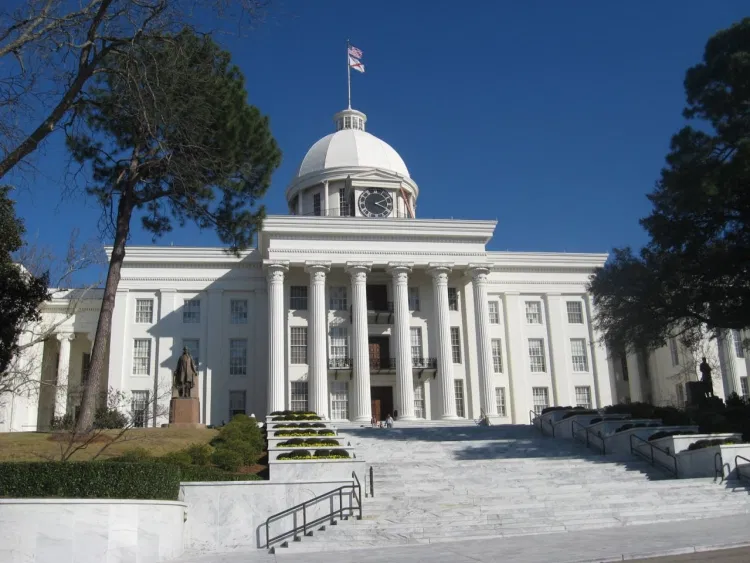
In addition to actions you can take individually, Lowry and conservation groups have campaigned for an Alabama Water Plan.
“As a whole, you’re talking about a state that doesn’t oversee water resources in a way that manages to balance it out between uses. When times are dry, we don’t have a water plan to help industries and water systems that are hurting.”
Cindy Lowry, Executive Director,Alabama Rivers Alliance
Lowry and the Alabama Rivers Alliance believe all Alabamians who care about water resources should resolve in 2026 to advocate for the Water Plan.
Learn about the plan on the Alabama Rivers Alliance website. Even better, attend this upcoming year’s 2026 Water Rally in Montgomery from March 20-22.
Make 2026 eco-friendly
Hope you are excited to make 2026 an eco-friendly year. Along with water conservation, re-visit and explore the rest of our series on composting and energy conservation. What other ideas do you have for conservation in Alabama? Let us know!
Sponsored by:


